The season runs from November to April, when the seas are calmest, with morning boats departing from Mirissa harbour for trips of around three to five hours. Sightings are very reliable in season, though these are wild animals and nothing is ever certain. This guide covers when to go, what the trip involves and how to choose an operator that puts the whales first, plus ideas for pairing your whale watching with Galle Fort and the south coast's best beaches.
In this guide
Why Mirissa Is a World-Class Whale Watching Spot
Mirissa's advantage is geography. The continental shelf drops away steeply just offshore, so deep-feeding whales come unusually close to land — boats often find blue whales within an hour of leaving the harbour. Sri Lanka is one of a handful of places worldwide where blue whales can be seen with such regularity.
It is not only about blue whales. Sperm whales, Bryde's whales, pilot whales and even occasional orcas pass through these waters, and spinner dolphins frequently escort the boats in acrobatic pods numbering in the hundreds. Even on a quiet whale day, the dolphins rarely disappoint.
When to Go: The November to April Season
The official whale watching season runs from November to April, coinciding with the calm seas of the southwest dry season. December to March typically offers the flattest water and the most consistent sightings, making these the premium months to plan around.
November and April are the shoulder months — trips run, and sightings are still good, but seas can be choppier. From May to October the southwest monsoon makes the ocean too rough for regular departures, and most operators pause. If whales are a priority, build your itinerary around the November–April window.
What a Whale Watching Trip Looks Like
Boats leave Mirissa harbour early in the morning, usually between 6 and 7 am, when the sea is calmest. After a safety briefing, the crew heads for the whale grounds, using experience — and often a network of spotter reports — to locate activity. The trip typically lasts three to five hours depending on how far the boats must travel.
When whales are found, responsible boats keep a respectful distance and cut their engines, letting the animals approach on their own terms. Bring sun protection, a light waterproof layer for spray, and motion-sickness tablets if you are at all prone — the open ocean swell affects more people than expect it.
Blue Whales, Sperm Whales and Dolphins
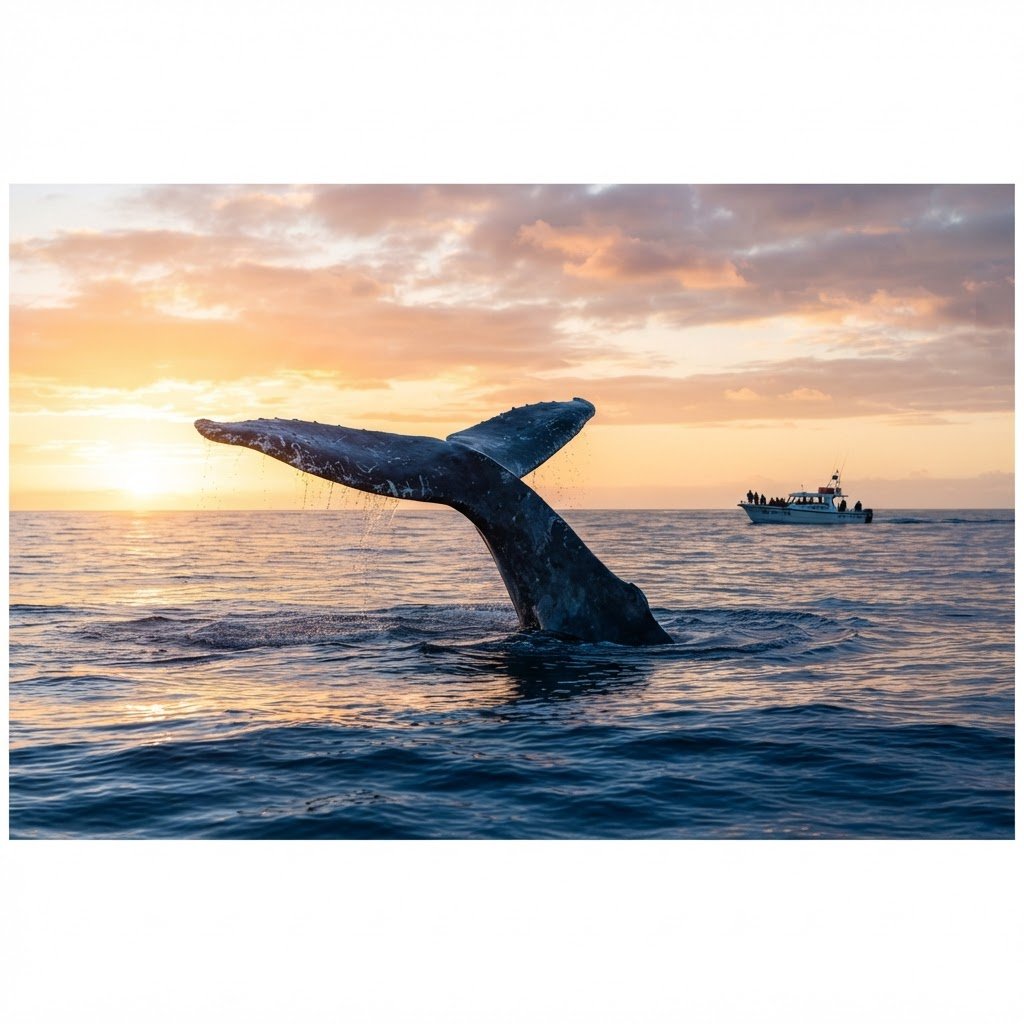
The blue whale is the star: a vast, mottled blue-grey giant surfacing with a tall, columnar blow before arching its enormous back for a deep dive, flukes lifting clear of the water. Seeing the planet's largest creature at close range is an experience travellers describe for years afterwards.
Sperm whales, the largest toothed predators on earth, are the second prize — look for their distinctive angled blow and massive square head. Between whale encounters, spinner dolphins provide the entertainment, leaping and spinning in huge, joyful pods around the boat.
Choosing a Responsible Operator
Whale watching only works long-term if the whales are not harassed, so choose your operator carefully. Responsible companies follow international guidelines: limiting boats around a single animal, keeping distance, approaching slowly from the side, and never chasing or cutting across a whale's path.
Ask how many passengers the boat carries — smaller groups mean a better experience and less pressure on the animals — and whether the crew includes a naturalist guide who can interpret what you are seeing. The cheapest ticket is rarely the best choice here; a reputable operator is worth the difference.
Combining Mirissa with Galle and Yala
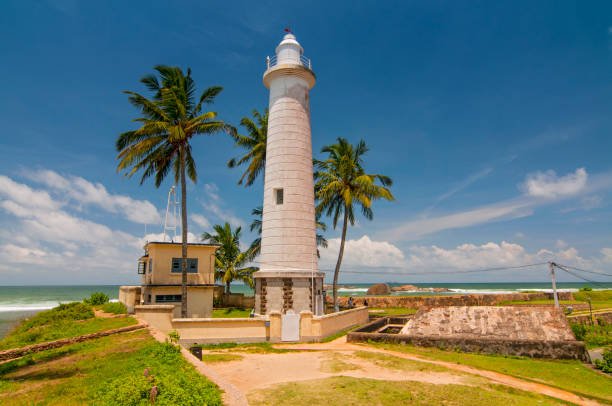
Mirissa sits perfectly on the classic south-coast route. Galle Fort, with its Dutch-era ramparts, lighthouse and café-lined streets, is an easy day trip or overnight stop to the west, while the stilt fishermen of Weligama and the surf breaks nearby fill a lazy afternoon.
To the east, Yala National Park is a half-day's drive away, making a whales-plus-leopards combination one of Sri Lanka's great two-day pairings. Many travellers do the morning whale trip, relax on the beach in the afternoon, then head to Yala for a safari the next day.