The climb to the top follows a series of staircases and walkways past ancient frescoes, the polished Mirror Wall with centuries of graffiti, and the famous Lion's Staircase, where giant stone paws are all that remain of a colossal gateway. The final reward is the summit itself: palace foundations, water gardens and a 360-degree panorama over forest and distant hills. Allow half a day, start early, carry plenty of water, and read this guide first.
In this guide
The Story Behind the Rock
Sigiriya's story begins in the 5th century, when King Kashyapa, having seized the throne, built his new capital atop this impregnable rock — part fortress, part palace, part statement of power. The summit held his royal palace, while the slopes below were laid out with elaborate water gardens, among the oldest landscaped gardens in the world.
After Kashyapa's defeat and death, the capital returned to Anuradhapura and Sigiriya became a Buddhist monastery, a role it kept for centuries. The site was largely forgotten by the outside world until 19th-century British explorers documented it, and it has fascinated visitors ever since.
Climbing Sigiriya: What to Expect
The ascent involves roughly 1,200 steps and takes most visitors between one and three hours round trip, depending on fitness and how long you linger. The lower sections wind through boulder gardens and terraced water gardens; the middle section climbs past the fresco gallery and Mirror Wall; the final push ascends the Lion's Staircase to the summit plateau.
The staircases are modern and sturdy, with handrails on the steeper sections, but the climb is exposed and can be strenuous in the heat. There is no shame in taking it slowly — the site is best savoured, not raced. Descend by the same route, keeping to the marked paths throughout.
The Frescoes, the Mirror Wall and the Lion's Paws
About halfway up, a sheltered gallery holds the famous Sigiriya frescoes — vivid paintings of celestial maidens that have survived some fifteen centuries remarkably intact. Photography is not allowed in the gallery, which somehow makes the experience more memorable.
Beyond the frescoes runs the Mirror Wall, a plastered corridor wall polished to a sheen and covered in ancient graffiti — poems and comments left by visitors between the 6th and 14th centuries, among the oldest tourist inscriptions in the world. Above it all, the Lion's Staircase: two enormous stone paws, the surviving fragments of a giant lion gateway that once guarded the final ascent.
The Best Time to Climb (and How to Beat the Heat)
Sigiriya can be climbed year-round, but the drier months from December to April are the most comfortable, with clearer skies and less humidity. Whatever the season, start as early as possible — the site opens in the morning, and an early start means cooler steps, softer light for photographs and fewer crowds at the summit.
Late afternoons are the second-best window, though you should allow enough time to descend before closing. Avoid the middle of the day if you can: the rock radiates heat, there is little shade on the upper sections, and the climb is significantly harder under a fierce sun.
What to Bring and How to Prepare
Wear comfortable walking shoes with good grip — the ancient steps can be uneven and slippery when wet. Bring at least a litre of water per person, a hat, sunscreen and a light rain layer in the wetter months. There are vendors selling water and snacks at the entrance, but prices rise with the altitude, so stock up at the bottom.
A reasonable level of fitness is enough; you do not need to be an athlete. Those with a fear of heights should know the upper staircases are open with drops to one side — the handrails are solid, but it is worth being mentally prepared. Wasps occasionally nest on the rock face; if disturbed, cover your face and move calmly to shelter.
Combining Sigiriya with Dambulla and Minneriya
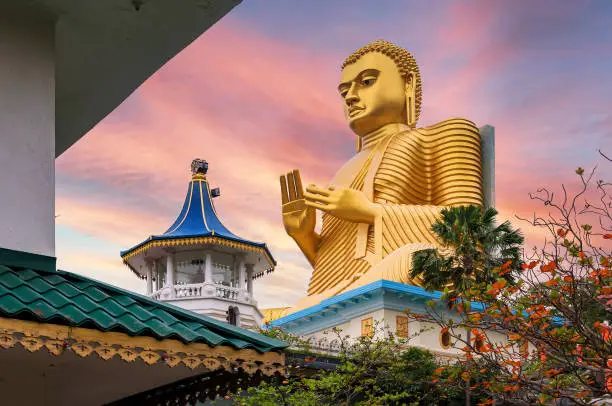
Sigiriya sits at the heart of the Cultural Triangle, and it pairs perfectly with the Dambulla Cave Temples, about half an hour away — a complex of five caves filled with Buddha statues and vivid murals, and an easy half-day visit. Many travellers do Dambulla in the morning and Sigiriya for a late-afternoon climb.
Wildlife lovers can add Minneriya National Park, famous for "the Gathering", when large herds of elephants congregate around the receding waters of the Minneriya Tank in the dry season. A morning safari followed by an afternoon at Sigiriya makes for one of the great days in Sri Lankan travel.